Is my evening drink affecting sleep and intimacy?
An evening drink can feel relaxing while complicating sleep and sex. Explore patterns, gentler changes and when cutting back calls for professional support.

In this article
- It helps you unwind, then the night gets complicated
- Feeling sleepy isn't the same as sleeping well
- Bring sex into the conversation too
- Look for a pattern without judging yourself
- Keep the ritual, change the drink if that suits you
- When cutting back needs support
- Decide what you want your evenings to feel like
- Sources & further reading
It helps you unwind, then the night gets complicated
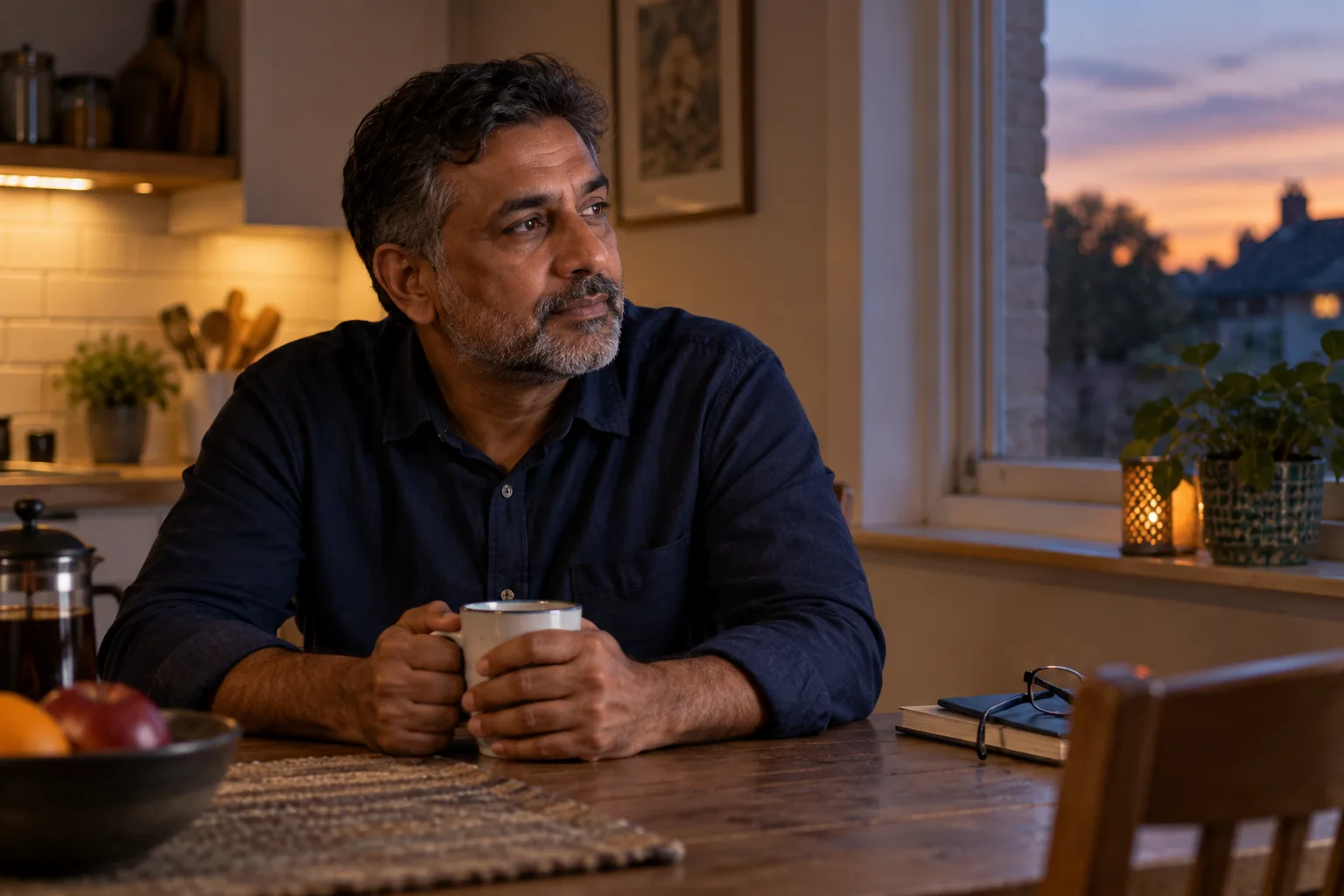
The evening drink has a place in your day. Work is finished, dinner is nearly done, and you finally feel yourself slowing down. You might associate it with time together, a good meal or the moment nobody needs anything from you.
Then you wake during the night, feel flat the next morning, or notice that sex doesn't go quite as expected. You're not sure whether the drink has anything to do with it. You also don't want every enjoyable habit turned into another thing to feel guilty about.
You can look at the pattern without putting yourself on trial. The question is whether your evenings are giving you what you want from them, and whether a change might be worth discussing or trying safely.
Feeling sleepy isn't the same as sleeping well
A review in NIAAA’s Alcohol Research journal describes how alcohol can have sedating effects early in the night while disrupting later sleep. Feeling that it helps you drop off doesn't necessarily mean the whole night is more restful.
That can explain why two observations seem to conflict: you fall asleep more easily, yet don't feel restored. It doesn't prove alcohol is the only reason you wake. Heat, pain, stress, other sleep problems and the circumstances of your life may also need attention.
If waking around three in the morning has become a regular problem, describe the whole night to a clinician. You don't have to choose between “it's alcohol” and “it's menopause” before asking for help.
Notice what happens after waking too. Do you return to sleep, lie worrying or get up because you're uncomfortable? Those details help describe the problem more clearly than simply calling yourself a bad sleeper.
Bring sex into the conversation too
A drink may feel like part of relaxing together. But wanting closeness, feeling less inhibited and having a comfortable sexual experience aren't the same thing. You can enjoy the ritual while also noticing that your body responds differently on some evenings.
NIDDK includes drinking too much alcohol among possible contributors to erection problems. ACOG also lists alcohol use among factors that can affect sexual arousal. Neither statement means one drink explains every sexual concern or that stopping guarantees a particular result.
If erections have changed, or you have a change in orgasm, give those concerns their own description. They deserve assessment even if alcohol is part of the conversation.
Closeness also needs clear consent. If either person is too impaired to freely understand and agree to what's happening, stop. A drink should never become a way to get past someone's hesitation or make unwanted contact feel unavoidable.
Look for a pattern without judging yourself
If it feels useful, keep a brief private note for a week or two: what and when you drank, when you went to bed, what woke you, and how you felt the next day. Include evenings without alcohol when they occur naturally. This is an observation exercise, not a diagnostic test.
Write down other obvious differences, such as a late meal, a stressful day or being away from home. Otherwise, it's easy to credit or blame one thing for a night that differed in several ways.
A better night after a different evening is interesting, but it doesn't establish a cure. A worse night doesn't prove changing the habit is pointless. Look for something worth discussing rather than trying to produce a perfect personal experiment.
Keep the notes somewhere you feel comfortable. You don't need to track intimate details or share them with a partner unless you want to.
A brief evening-to-morning note
| Notice | Keep it simple |
|---|---|
| The evening | What and when you drank; any other obvious differences. |
| The night | Bedtime, awakenings and what seemed to wake you. |
| The next day | How rested you felt and any concern worth discussing. |
This can reveal questions, not prove a cause. Seek medical advice before reducing suddenly if dependence may apply.
Keep the ritual, change the drink if that suits you
If you aren't dependent on alcohol and want to experiment with drinking less, think about which part of the ritual you want to keep. It might be a special glass, a break from work or ten minutes together before dinner. An alcohol-free drink can still belong to that moment.
You could tell your partner, “I want to see how my evenings feel with less alcohol. I'd still like us to have that time together.” Make the invitation about your own experience rather than announcing what they ought to change.
If the drink has become the only time you pause together, our article on missing closeness in a busy relationship may help. You can protect time together without expecting a beverage to do all the work of helping you connect.
When cutting back needs support
NHS guidance warns that suddenly stopping can be dangerous if you are dependent on alcohol. Shaking, sweating, nausea or anxiety when a drink is delayed can be warning signs. Get medical advice before a sudden reduction if this may apply to you. Severe withdrawal, such as seizures, confusion or hallucinations, needs emergency care.
You don't need to wait until things feel extreme to ask for help. You can say, “I'm finding it harder to cut back than I expected, and I'd like support.” A clinician can help assess the safest next step and any interaction with medicines.
If you're taking an antidepressant and noticing sexual changes, ask your pharmacist or prescriber about alcohol as part of the medication review. Don't change either habit and prescription together without appropriate advice.
Decide what you want your evenings to feel like
Perhaps your goal is waking more rested. Perhaps it's enjoying intimacy without wondering how a drink will affect you. Perhaps it's simply having more choice about a routine that has become automatic.
Choose the question that matters to you, and take a safe next step. If sleep or sexual symptoms continue, seek help for them in their own right. You don't have to solve every habit before you deserve a clear explanation and useful care.
Sources & further reading
- NIAAA Alcohol Research: Sleep and alcohol use in women ↗
- NHS: Alcohol-use disorder ↗
- NIDDK: Symptoms and causes of erectile dysfunction ↗
- ACOG: Your sexual health ↗
Read our editorial standards.