Orgasms feel different after 40: what now?
Taking longer, feeling less, or struggling to climax? Explore the change with less pressure and clearer questions.

In this article
A change can feel unsettling
Something that used to work may not work in the same way now. You might take longer to reach orgasm, find it less intense, or feel as though it's just out of reach. That can be disappointing, especially when you find yourself thinking about it the whole time.
You don't have to pretend it doesn't matter. You also don't have to make every sexual experience a test of whether things are back to normal. Start with what has changed and what you would like help understanding.
What have you noticed when there’s less pressure?
Pause for a second. Does orgasm feel different when you're alone as well as with a partner? Are you enjoying the touch but not reaching orgasm, or does everything feel less pleasurable? Is there discomfort, or a change in sensation you can describe?
You don't need to test yourself or keep trying until you have an answer. Think about the experiences you've already had. “I'm not sure” is useful information too.
Differences between situations can give you something to discuss, but they don't prove a physical or emotional cause. Write down what you notice and what bothers you most. That makes your concern easier to explain.
There is more than one possible reason
Sex Therapy London, an NHS service, explains that orgasm difficulties can involve medicines, health conditions, hormone changes, stress, tiredness, or pressure. The type of touch matters too. Many women need clitoral stimulation rather than penetration alone.
That means a change is worth exploring without jumping to a single explanation. Notice whether it happens alone, with a partner, or both. Also note any pain or dryness; our guide to comfort during sex covers those concerns.
Give the change some detail
| What you notice | A useful question |
|---|---|
| It takes longer | Does this happen alone, with a partner, or both? |
| Sensation feels different | When did I first notice the change? |
| Pressure gets in the way | What happens when reaching orgasm is not the goal? |
Bring your observations to a clinician if the change concerns you.
Give yourself room to explore
If you want to, make space to notice what feels pleasant now. You might prefer a different pace, more direct guidance, or a kind of touch you have not asked for before. There's no required exercise here, and you don't need to keep trying if you feel frustrated or uncomfortable.
Try asking yourself, “Am I enjoying this?” before asking, “Am I nearly there?” You can stop even if you have spent time on it. Pleasure doesn't become wasted effort because it did not end in orgasm.
If the main change is that you rarely feel interested in starting, our guide to low desire in women may be more useful alongside this one.
Take the test out of partnered sex
You could say: “Things feel different lately. I would like to show you what feels good without either of us worrying about making an orgasm happen.” That makes room for useful feedback instead of guessing.
Simple words can be enough: “Keep doing that,” “A little slower,” or “I would like to stop.” Your partner doesn't need to read your mind, and you don't need to protect their confidence by pretending something feels better than it does.
Our guide to closeness without a script has more suggestions for setting expectations together.
What to tell your clinician
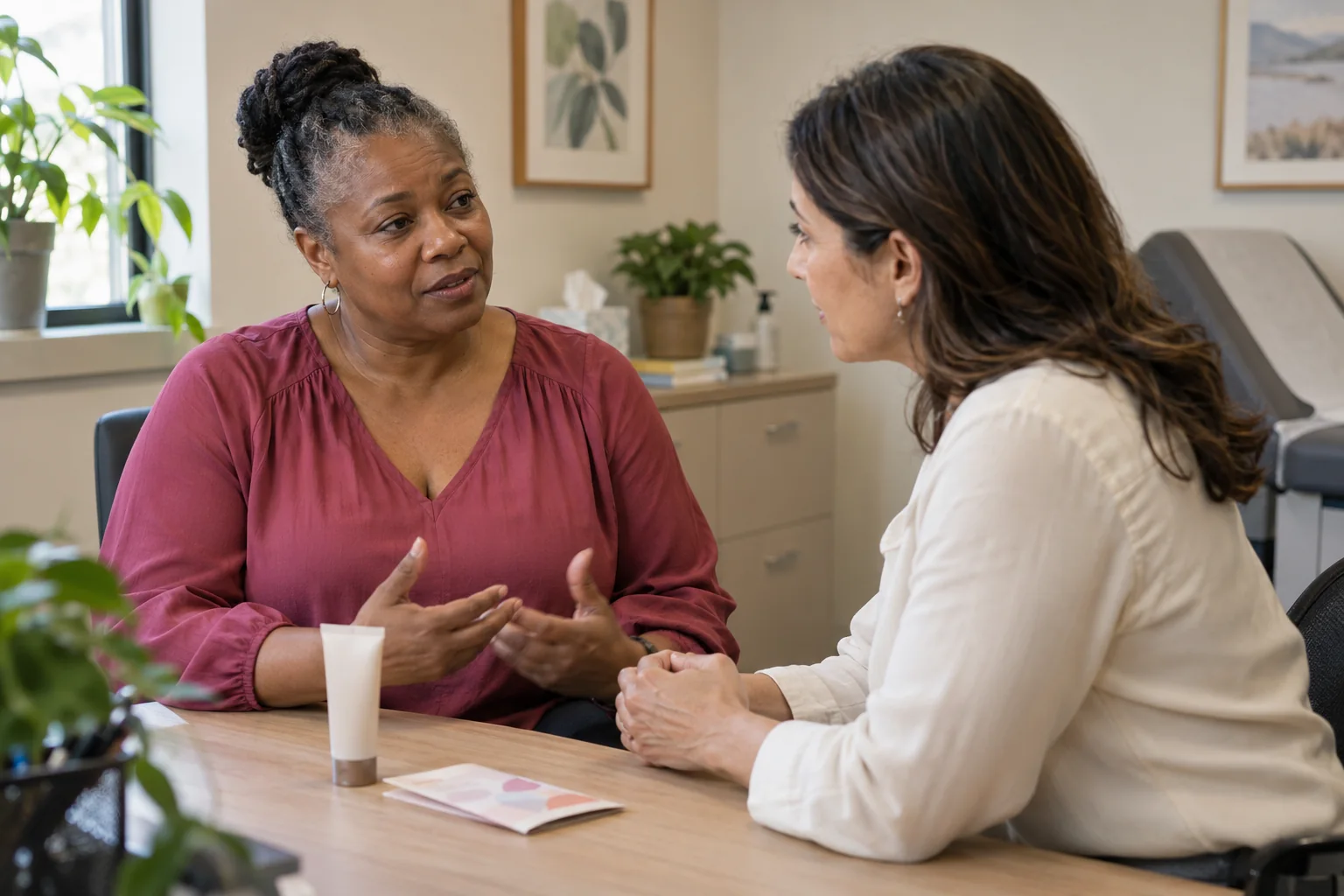
If the change is persistent, new, or upsetting, bring it up. Describe roughly when it began, whether sensations have changed, and whether there's discomfort. Mention medicines and any recent treatment or surgery. Do not change prescribed medication without discussing it.
Ask what might be contributing and what support is available. You can also ask whether a sexual-health specialist or qualified psychosexual therapist would be helpful. Our appointment preparation guide gives you a simple way to gather your thoughts.
What if your partner takes it personally?
You could start with, “I want us to talk about what feels good, but I don't want an orgasm to become proof that either of us did well.” Then explain what you'd like more or less of.
Ask yourself whether their questions feel interested or demanding. “Would you like something different?” may feel very different from being asked repeatedly why you haven't finished. Tell them which approach helps you speak openly.
If you've been pretending, you can choose to start a more honest conversation now. You don't need to give a detailed account of every past experience. Focus on what you want to be able to say going forward.
One small next step
Choose what fits today: talk to a partner, make a note for an appointment, or give yourself a break from trying. Your concern deserves attention, and you can approach it at your own pace.
Sources & further reading
Read our editorial standards.